Before the visit
Keep the compartment closed and arrange suitable alternative frozen storage if it cannot maintain safe conditions. Do not chip ice with a sharp tool, apply a heat gun or remove internal panels.
Clear a safe working area, keep any displayed message and mention custom panels or restricted access. Do not dismantle the appliance in preparation.
What you may be noticing
An intermittent fault needs a short timeline. Note when normal operation returns, what happens just before the interruption and whether a message appears. Do not recreate an unsafe condition to capture it.
- Food softening despite a low selected temperature.
- A heavy frost patch near a door or drawer.
- An alarm that returns after it is acknowledged.
- An unusual run-time or cycling pattern.
- Ice building up where the drawer meets the cabinet.
When a problem comes and goes
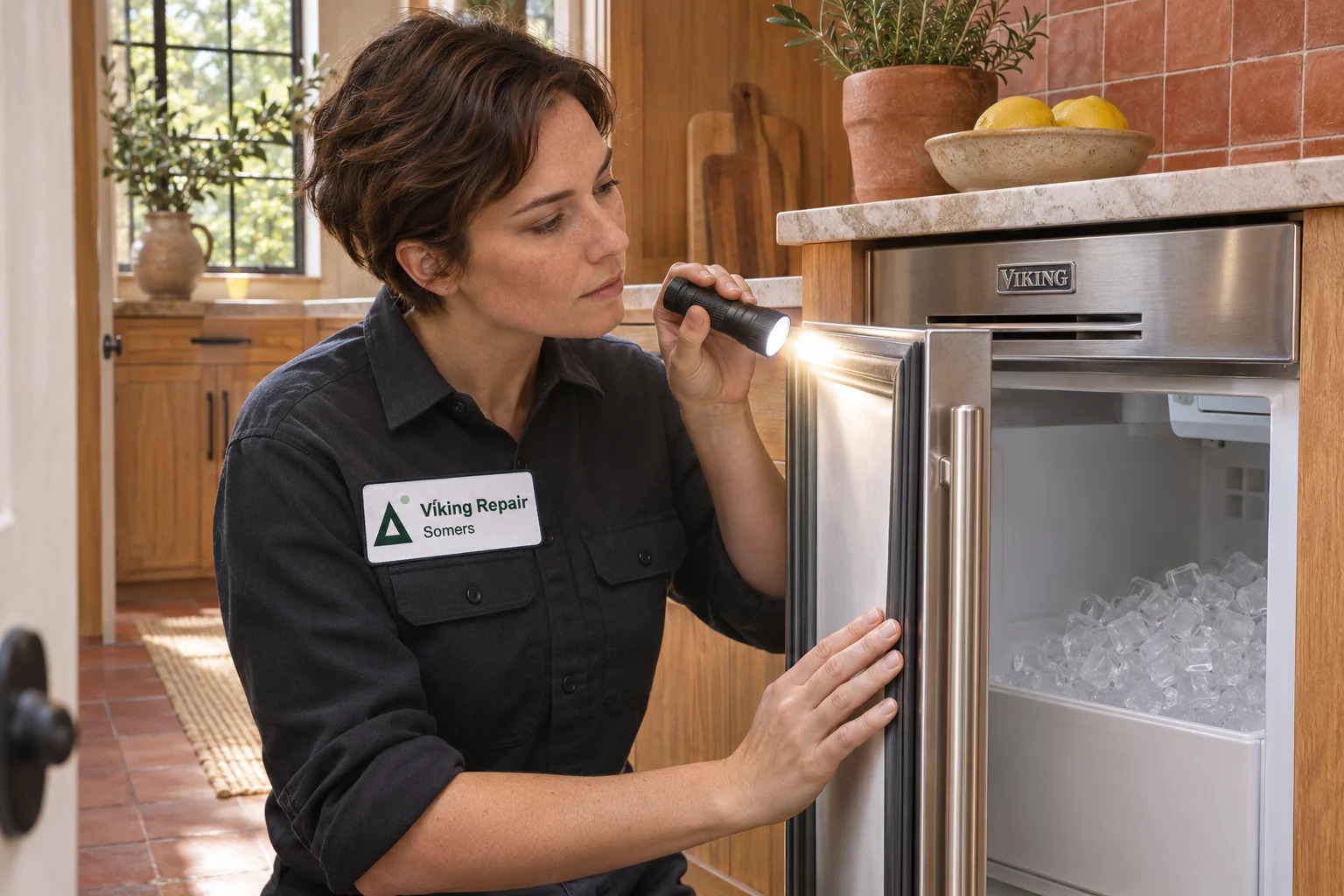
A frost pattern is evidence to describe, rather than a part diagnosis. Frost around a gasket presents a different starting point from a cabinet that warms without visible ice.
Describe the Thermador cooking, refrigeration, wine-storage or dishwashing appliance and any custom panels or access restrictions. Standalone Thermador ice-maker service is not included in this site’s service list.
Diagnosis, approval and repair
The diagnostic/service call is $149, credited toward an approved repair. After diagnosis, you receive an itemized repair quote before work begins. Genuine OEM parts are used.
Availability, including same-day or emergency requests, depends on the address and schedule. Sending a request does not reserve an appointment.
The 1-Year Parts & Labor Warranty covers parts installed and labor performed under normal use. It excludes new unrelated faults, misuse, power surges and work performed by others after the visit.
Sealed-system and refrigerant work is performed by an EPA-certified technician. Manufacturer names identify equipment serviced; this is independent service.
What the inspection needs to establish
The technician adapts the inspection to the installation and reported behavior. These are areas to evaluate, not a list of parts to replace.
- Compare reported temperature changes and alarm timing.
- Inspect sealing surfaces, drawer travel and airflow.
- Test the applicable fan, defrost, sensor and control circuits.
- Investigate cooling-system performance when supported by the earlier checks.